
Service Description
asrv.aero
BRS Integration Service v 1.0
Namespace: http://www.asrv.aero/webservices/1.0/BrsIntegrationService
Document revisions
Date | Description | Author |
|---|---|---|
| 2023-09-04 | First version under version control. |
1. Service facts
-
Name: BrsIntegrationService
-
Operations, see Service operations.
- REST based service. Operations are accessed using HTTPS POST.
- Service security: Decided by implementation.
-
Standard return codes are described here: Service error response
2. Introduction
2.1. Overview
This service defines a set of operations designed to support integration between airports and BRS (Baggage Reconciliation System). At the bag level this service extend the functionality defined in Bag Event Notification Service, and add functionality for reporting batch oriented events. A "batch" in this regard is a set of bags treated as one "unit" and delivered at some location without any other bags being delivered to the same location.
The service is designed to be implemented by both the relevant airport and the BRS provider.
A set of use cases are described here: Avinor use cases
2.2. Implementation considerations
Any implementation of this service MUST use the XSD files provided here: XSDs
It is however up to the service provider which data elements to support.
Any service provider should make available documentation about the actual implementation, including:
-
- the address of the service.
- any limitations in the implementation.
2.3. Purpose of this service description
This service description has the following purpose:
-
-
- Describe of service in enough detail for a service provider to implement it.
- Describe the service so that a client (of this service) developer can use it.
- Make available the XSD files necessary to implement and use the service.
- Make it possible for relevant people at airports, airlines, handlers and other aviation partners to understand the available functionality and then to decide if to implement/use it or not.
-
2.4. Intended readership
-
- IT architects
- Developers
- Business architects
- Interested parties in the aviation community
3. Service operations
3.1. Overview
The operations in Bag Data Submit Service version 1.0 submits data will typically be asynchronously processed. This means that all data that follow the syntax will be accepted, but it might not be used by downstream systems.
The figure below visualizes the defined operations.
Figure
Figure will be provided
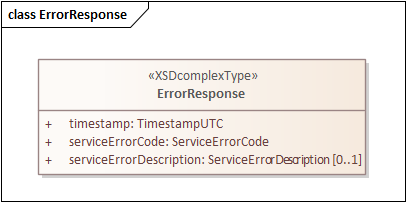
3.2. Service error response
ErrorResponse is typically used with HTTP Response Code: 400 Bad Request
|
|
|
3.3. Operations
3.3.1. SubmitLostBagData( LostBagDataIn )
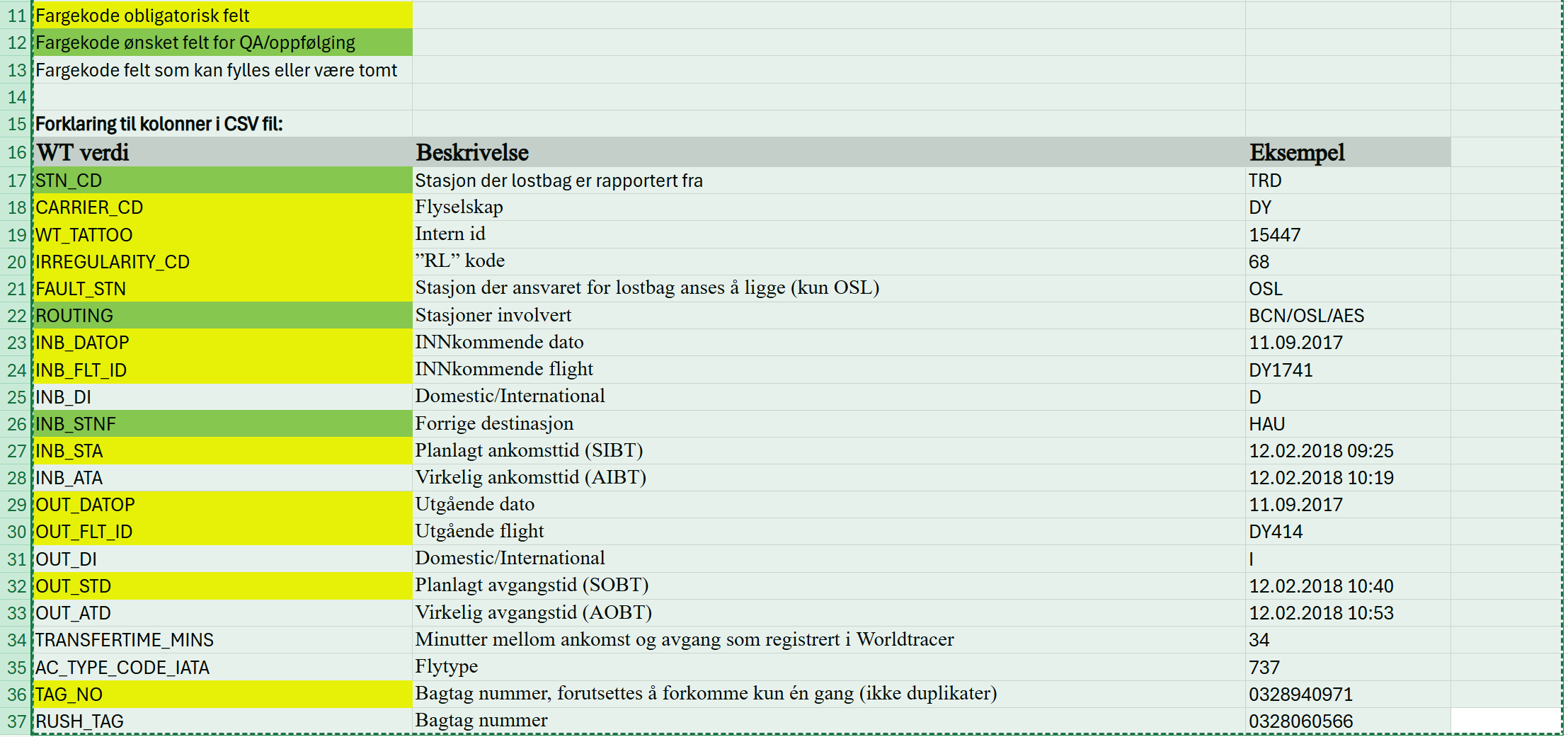
Submits information about a lost bag (LostBagData). This is data related to one bag. Since BagTagNumber isn't unique across airports and dates additional information (BagLostAirportIATA, BagLostDate) is needed to uniquely identify the bag.
Parameters
Returns
- 200 OK if everything went well. The data is sent on for further processing.
- 400 Bad Request if there were any issues with the input data. Service error response defies how to get more information about the actual problem.
- Other error/warning returns are possible.
3.3.2. SubmitXxxData( XxxDataIn )
Submits Xxx data
Parameters
Returns
- 200 OK if everything went well. The data is sent on for further processing.
- 400 Bad Request if there were any issues with the input data. Service error response defies how to get more information about the actual problem.
- Other error/warning returns are possible.
4. Data entities
4.1. LostBagData
|
Figure Figure will be provided
|
|
4.2. LostBagDataIn
|
Figure Figure will be provided |
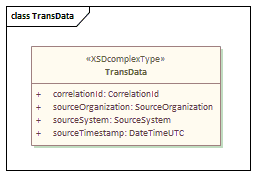
4.3. TransData
4.4. xxData
|
Figure Figure will be provided
|
|
4.5. XxxDataIn
5. Avinor use cases
6. Overview
This section describes how Avinor expect this service to be used with a set of use cases. Other airports might use the service in a different way.
7. Use cases
7.1. Xxx
7.2. Yyy
8. XSDs