Overview
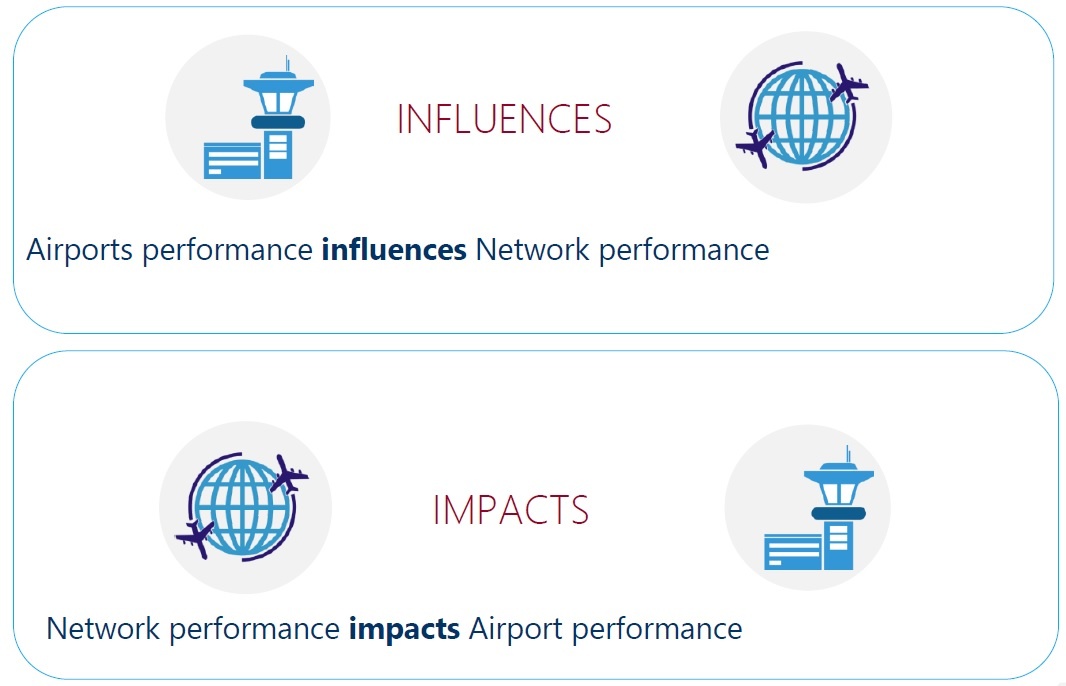
This section considers the need for airports to exchange data with the air traffic management (ATM) network including local ATC and the Network Manager.
Actions
- Review Use case sope, complete also with data use cases from ATC flowing to Airports (NOTAMS, etc.) Scott Wilson 15.05.2023
- Migrate existing use cases into the ACRIS use case template into Confluence (copy the ACRIS Use Case Template underneath D2 - ATC (Core) page) Scott Wilson 15.05.2023
- Terminology: Provide a report on how many terms identified need to be defined and how many of these are existing in the ACRIS model. Provide update on a Friday meeting Scott Wilson 15.05.2023
- Scott needs access to ACRIS model
- Members to (peer) review D2 use cases before creating sub-pages 7/7/2023
Use Cases
- D2 - Condensed proposal for "airport transit"(turnaround) data to Eurocontrol
- Use Case: Aeronautical Information Updates (NOTAM)
- Use Case: Airport Transit Analysis
- Use Case: Airport Transit View
- Use Case: Departure and Arrival Planning Information
Information Exchange Requirements
Airport Transit View Message
Name (based on EUROCONTROL internal DB) | Definition | Correspondence with ACRIS Semantic Model (language) | Priority - Arrival Flight | Priority - Departure Flight | Example | Notes |
|---|---|---|---|---|---|---|
| LOCAL_AIRPORT_IATA | IATA local airport code | Mandatory | Mandatory | SKG | ||
| LOCAL_AIRPORT_ICAO | ICAO local airport code | Mandatory | Mandatory | LGTS | ||
| TIMESTAMP | Time of last update of the message in ISO 8601 format. | Metadata | ||||
| TIMESTAMP_FORMAT | Time of last update of the message. | Metadata | ||||
| AODBID | A unique code for a flight, which can be used for linking arrival and departure flights. | Mandatory | Mandatory | 12341241 | This field should be globally unique and not use e.g. IATA Flight Number which is not unique. It matches another flight's ROTATIONID. | |
| ROTATIONID | A unique code for a flight, which can be used for linking arrival and departure flights. | Mandatory | Mandatory | 12341666 | This field should be globally unique and not use e.g. IATA Flight Number which is not unique. It matches another flight's AODBID. | |
| FLIGHTNUMBER | The IATA flight number of the main flight (not code shares). | Flight number | Recommended | Recommended | A3501 | |
| CALLSIGN | Fightplan associated with the flight | ARCID | Recommended | Recommended | AEE1DM | |
| REGISTRATION | The aircraft registration. | Call Sign | Recommended | Recommended | SXDVW | |
| IATA_AIRCRAFT_TYPE | The IATA code used for the aircraft type. | Aircraft Type | Recommended | Recommended | 32N | |
| ICAO_AIRCRAFT_TYPE | The ICAO code used for the aircraft type. | Aircraft Type | Recommended | Recommended | A20N | |
| TYPE | The type of flight event. | Arrival Departure | Mandatory | Mandatory | A D | For arrival flights either ‘A’ or ‘arrival’ For departure flights either ‘D’ or ‘departure’ This affects the interpretation of certain other fields e.g. RUNWAY becomes the runway of arrival / departure. |
| AIRPORTNAME | The name of the airport of destination (ADES) or departure (ADEP). | ADES, ADEP | Optional | Optional | Heraklion-Nikos Kazan | |
| SHORTAIRPORTNAME | The shortname of the airport of destination (ADES) or departure (ADEP). | ADES, ADEP | Optional | Optional | Heraklion | |
| IATAAIRPORTID | The IATA identifier of the airport of destination (ADES) or departure (ADEP). | Airport identification | Recommended | Recommended | HER | |
| ICAOAIRPORTID | The ICAO identifier of the airport of destination (ADES) or departure (ADEP). | Recommended | Recommended | LGIR | ||
| AIRLINENAME | The name of the airline operating the flight. | Airline Identification | Recommended | Recommended | Aegean Airlines | |
| IATAAIRLINEID | The IATA designator of the airline. | Recommended | Recommended | A3 | ||
| ICAOAIRLINEID | The ICAO designator of the airline. | Recommended | Recommended | AEE | ||
| HANDLINGAGENT | The name of the company responsible for handling of aircraft during turn-round at the airport. | Ground Handler | Optional | Optional | GOLDAIR | |
| LANDING_UTC | Actual Landing Time. (ALDT) | ALDT | Recommended | Format: YYYY-MM-DD 24H:MM:SS | ||
| SCHEDULED_IBT_UTC | Scheduled In Block Time. (SIBT) | SIBT | Recommended | Format: YYYY-MM-DD 24H:MM:SS | ||
| ESTIMATED_IBT_UTC | Estimated In Block Time. (EIBT) | EIBT | Recommended | Format: YYYY-MM-DD 24H:MM:SS | ||
| ONBLOCK_UTC | Actual In Block Time. (AIBT) | AIBT | Recommended | Format: YYYY-MM-DD 24H:MM:SS | ||
| GATE | The gate used for boarding the flight. | Optional | Optional | 8A | ||
| PARKINGPOSITION | The aircraft stand used for the flight. | Stand | Optional | Optional | 11B | |
| RUNWAY | The runway used for the flight - it can be arrival or departure. | Runway | Recommended | Recommended | 15 | Should be runway direction. |
| GATEOPEN_UTC | Gate Open Time. | Optional | Format: YYYY-MM-DD 24H:MM:SS Actual Start Gate Time (ASGT). | |||
| BOARDINGOPEN_UTC | Actual Start of Boarding Time. | ASBT | Optional | Format: YYYY-MM-DD 24H:MM:SS | ||
| BOARDINGTIME_UTC | Boarding Time. | Optional | Format: YYYY-MM-DD 24H:MM:SS End? Need to check. Actual End Boarding Time (AEBT) | |||
| GATECLOSED_UTC | Gate Closed Time. | Optional | Format: YYYY-MM-DD 24H:MM:SS Actual End Gate Time (AEGT) | |||
| SCHEDULED_OBT_UTC | Scheduled Off Block Time. (SOBT) | SOBT | Recommended | Format: YYYY-MM-DD 24H:MM:SS | ||
| ESTIMATED_OBT_UTC | Estimated Off Block Time. (EOBT) | EOBT | Recommended | Format: YYYY-MM-DD 24H:MM:SS | ||
| OFFBLOCK_UTC | Actual Off Block Time. (AOBT) | AOBT | Recommended | Format: YYYY-MM-DD 24H:MM:SS | ||
| CTOT_UTC | Calculated Take Off Time. (CTOT) | CTOT | Recommended | Format: YYYY-MM-DD 24H:MM:SS | ||
| AIRBORNE_UTC | Actual Take Off Time. (ATOT) | ATOT | Recommended | Format: YYYY-MM-DD 24H:MM:SS | ||
| SERVICETYPE | The IATA flight service type. | Recommended | Recommended | J | This is the IATA code. It is assumed that AODB do not contain the ICAO codes. If so, we could add an extra field. | |
| VIA_AIRPORT_NAME | Name of the airport where there is either an extra stop between ADEP and Local Airport or an extra stop between Local Airport and ADES. | Conditional - Optional | Conditional - Optional | Rhodes International | ||
| VIA_AIRPORT_SHORTNAME | Short name of the airport where there is either an extra stop between ADEP and Local Airport or an extra stop between Local Airport and ADES. | Conditional - Optional | Conditional - Optional | Rhodes | ||
| VIA_ICAO | ICAO code of the airport where there is either an extra stop between ADEP and Local Airport or an extra stop between Local Airport and ADES. | Conditional - Recommended | Conditional - Recommended | LGRP | ||
| VIA_IATA | IATA code of the airport where there is either an extra stop between ADEP and Local Airport or an extra stop between Local Airport and ADES. | Conditional - Recommended | Conditional - Recommended | RHO |
AODB ID and ROTATION ID
These are the values, which allow us to link arrival and departure flights together. The objective is to have AODB ID as a unique number or string. The desired logic is like the one presented below:
| AODBID | ROTATIONID | CALLSIGN | |
|---|---|---|---|
| Arrival Flight | 1111 | 2222 | AAA123 |
| Departure Flight | 2222 | 1111 | AAA333 |
Unique identification
e.g. for AODB ID. Consider e.g.
- GUFI - The strategic target from ATC/Eurocontrol point of view. Not yet broadly and in any case implemented / available.
- IFPLID - Available for IFR flights within Europe and in concern of Eurocontrol.
- Local ATC ID - Available for IFR flights within Switzerland
- Local Airport ID - Created for local VFR flights that are not of ATC concern
VIA_*
An airport has the possibility to have the VIA information. However, FPL doesn't have that possibility.
Imagine that you have a flight from Alicante to Manchester via Lille. Your final destination will be Manchester, that means that you have to give border control resources to the departure passengers from Alicante. This is a legal requirement, but on the other side, you will have one FPL from Alicante to Lille and another FPL from Lille to Manchester. This is the reason for the via, you need to link that departure with a FPL with ADES different to the final destination.
Exchanging Information
Airport Transit View Message Exchange
Current method
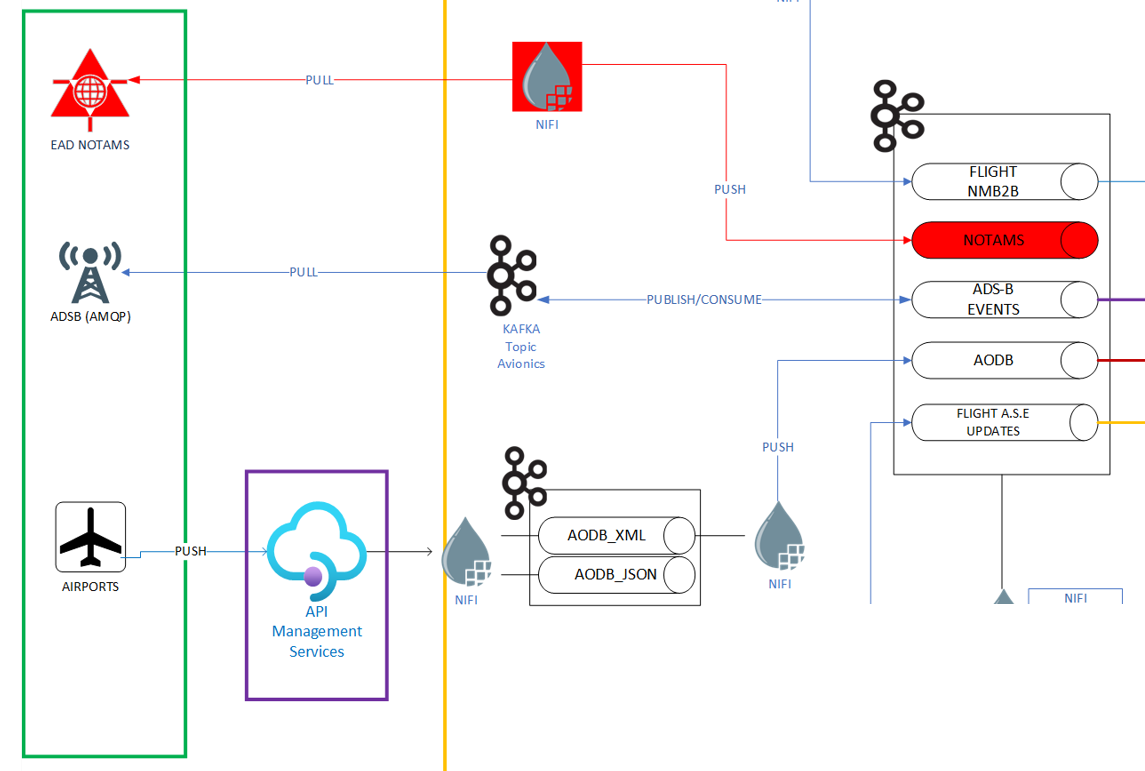
At the moment, EUROCONTROL pulls files from airports. Each airport has its own server, file format, data format.
Future method
EUROCONTROL will make an API available for airports to push standardised messages/files (XML/JSON) to EUROCONTROL.
A standardisation of the file name is desirable. The structure could include the ICAO airport code and the date when the file was generated. Example: ICAO Code + Date (DD:MM:YYYY HH:MM:SS) -> EBBR_13032023162300
This approach will be tested as part of E-CRA (https://www.eurocontrol.int/news/new-eurocontrol-network-manager-programme-integrate-small-and-regional-airports-network).
References
- A-CDM in Europe - A-CDM Europe.pdf
- A-CDM - https://www.eurocontrol.int/concept/airport-collaborative-decision-making
- DPI implementation guide - https://www.eurocontrol.int/archive_download/all/node/10580
- Airport transit view - https://www.mdpi.com/2226-4310/5/2/59
Opportunities
- EUROCONTROL: Harmonisation of A-CDM milestone/timestamp abbreviations e.g. including those used by airports in their local systems.
- EUROCONTROL: FIXM extension for A-CDM or decide to use ACRIS